
AI Cardiovascular Screening
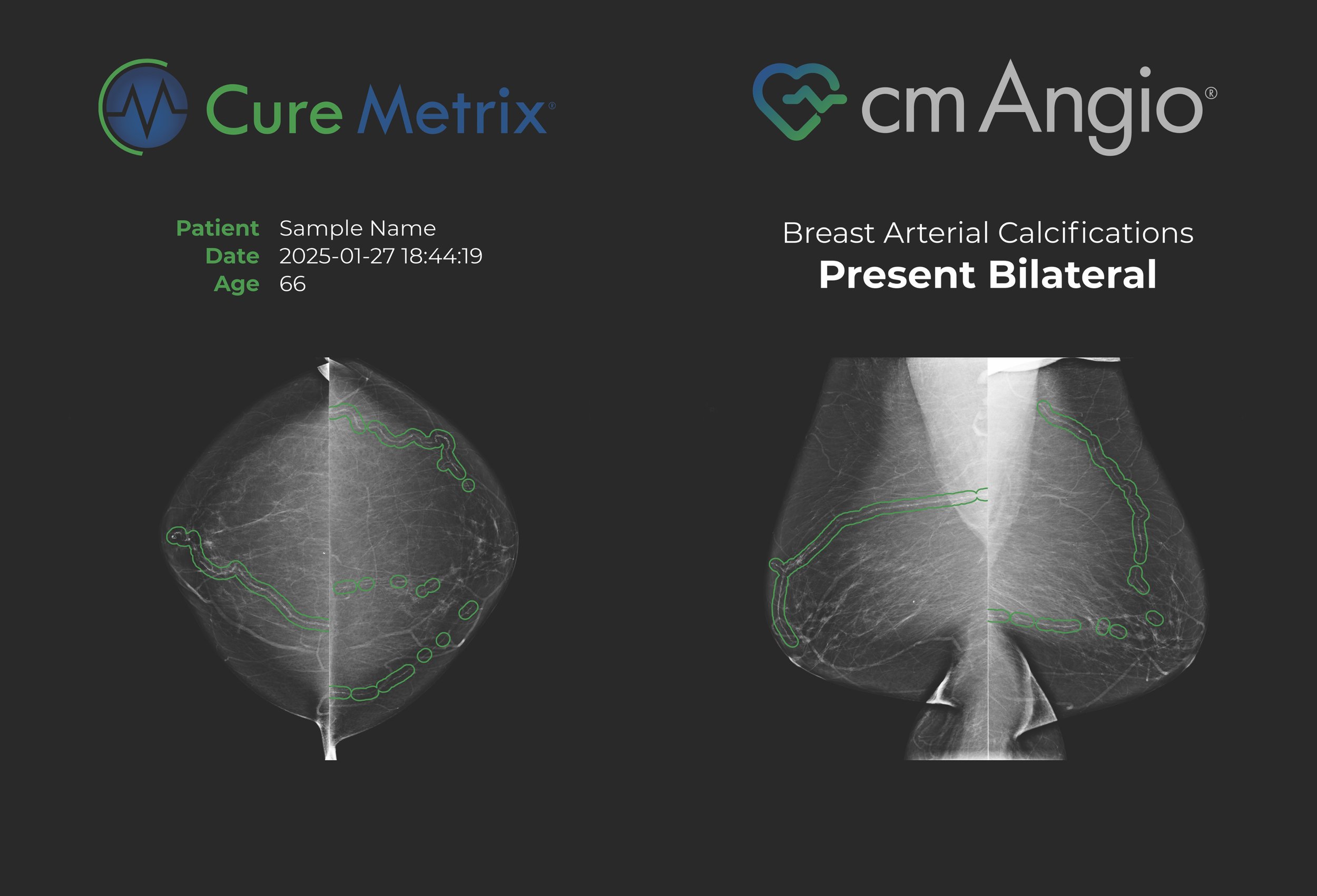
Breast Center of New England has recently added cmAngio, the first FDA-cleared AI for Breast Arterial Calcification (BAC) detection and localization, becoming the first location in New Hampshire to implement the technology. By identifying BAC from the same mammogram used for breast cancer screening, cmAngio provides a true mammogram 2-for-1: additional clinical insight with no additional imaging, radiation, appointments, or time required for our patients.
Women are significantly more likely to be diagnosed with cardiovascular disease (CVD) at later stages than men — lagging behind by almost a decade — and we're also more likely to have worse outcomes following a heart attack or stroke. In fact, research shows 47% of women die within 5 years of a heart attack, compared to 36% of men.
What's behind this discrepancy?
Biology may be partly to blame — women can experience the symptoms of CVD differently than men, so women may not think to bring up symptoms of CVD with their doctor. We also might have slightly different pathways to cardiovascular events like heart attacks and strokes than men do. But, let's be honest: medicine in general may underestimate a woman's risk for CVD, either because it's so long been associated with men, or because doctors don't have the right tools in their toolbox to fully assess a woman's risk.
That's where your annual mammogram comes in.
Recent research has proven an association between non-cancerous calcium deposits — BAC -- that show up on mammograms and CVD. It appears that the more of this calcium you have building up over time, the higher your risk of a serious heart-related event could be.
Breast Arterial Calcification Screening FAQs
Q: What are these calcifications?
A: They're called BAC, or breast arterial calcifications. They are tiny pieces of calcium that build up within the arteries of the breast. They are more common as we age, and they have been shown to be associated with cardiovascular disease risk. They don't have anything to do with breast cancer, so they haven't been reported frequently on mammograms before.
Q: Why is this important?
A: This is a new program Dr. Lizer is doing because there's a lot of scientific research about the link between these calcifications and the risk for heart disease and stroke. Breast Center of New England is the first practice in New Hampshire to use the technology. What's interesting about BAC is they may be present even in women who have a negative or low coronary calcium score by CT. BAC form along a different process than atherosclerotic calcifications, and their presence, especially if they're increasing over time, is associated with cardiovascular disease events like heart attack and stroke.
Q: Is this the same thing as a calcium score (coronary artery calcium CT)?
A: No. Coronary artery calcium CT (CAC CT) looks for calcified atherosclerotic plaque in the arteries that supply blood to the heart. BAC occur not in the inner portion of an artery, where plaque is found, but in the middle of the wall of the artery. This leads to overall stiffening of the artery. What’s important about this calcification pattern is that, if it’s going on in breast tissue, it’s highly likely that it’s happening throughout your body. Because BAC is different from what’s seen on CAC CT, BAC may be present in women who have a negative or low coronary calcium score by CT. The presence of BAC, especially if they're increasing over time, is associated with cardiovascular disease events and increased mortality.
Q: How does cmAngio work?
A: You sign up for cmAngio at the time of your mammogram. The AI analyzes the mammogram for the presence of BAC pixel-by-pixel in a way the human eye can't. We don't need to take any additional pictures for the AI to work — it analyzes the standard mammogram images we always take. Dr. Lizer will note if BAC are present or not in your mammogram report so you can discuss it with your PCP, or your cardiologist if you already see one. You'll also receive a summary letter about your results.
Q: What is the cost?
A: The fee for cmAngio® is $60, payable when you have your mammogram. This isn't covered by the same insurance that covers your mammogram, but it can be paid for with your HSA/FSA.
For additional information to learn how Breast Arterial Calcifications could be a warning sign for heart disease, visit The Menopause Society.
